

There’s a small opening near the upper part of many bathroom sinks that most people barely notice. Until it starts looking dirty. Or smelling strange.
That opening is the sink overflow.
It’s there to give rising water another route toward the drain before the basin spills over. Pretty simple job. The problem is that soap, toothpaste, bits of hair, dirt, mineral deposits, and other residue can slowly collect around the opening and inside the passage behind it.
And because nobody really thinks about cleaning that area during normal bathroom cleaning, the buildup can sit there for quite a while.
The easiest way to clean a sink overflow opening is to remove the visible grime, scrub inside with a small flexible brush, flush it with warm water, and repeat if needed. For lighter odor or residue, baking soda and vinegar can also be useful.
Nothing especially complicated. The awkward part is just reaching inside.
What Is a Sink Overflow Opening?
The overflow opening is usually located near the top of the sink basin, often underneath the faucet area or along the inside wall of the bowl.
It isn’t the same thing as the main drain.
The main sink drain is the opening at the bottom of the basin where water normally leaves. The overflow is more of a backup passage. When water rises high enough in the basin, it can enter that opening and travel through an internal channel toward the drainage system.
At least, that is what should happen.
Because the passage sees moisture but doesn’t receive the same regular flow of water as the main drain, residue can stick inside it fairly easily. Small amounts of soap, dirty water, toothpaste, and other material enter the opening over time and may remain there.
That explains why a bathroom sink can look perfectly clean from above while still having an unpleasant smell somewhere around the overflow.
Why Does a Sink Overflow Opening Get Dirty?
A lot of it is just normal bathroom use. Soap and toothpaste leave thin films behind. At first you probably won’t notice anything, but repeated exposure creates a layer around the opening. Small hairs and bits of debris can stick to that layer too.
Hard water creates another problem. Minerals in the water may leave pale, chalky deposits or harder crust around the opening.
Then there’s moisture.
The inside of the overflow passage may remain damp after the sink is used. Combine moisture with soap residue and organic debris and you have a place where grime and microorganisms can gradually accumulate.
The biggest reason, though, might simply be that the overflow rarely gets cleaned.
People wipe the basin. They clean the faucet. They scrub around the drain.
The overflow opening usually gets ignored.
So even a sink that gets cleaned regularly can still have quite a dirty overflow passage.
Signs Your Sink Overflow Opening Needs Cleaning
Sometimes you can actually see the problem. Other times you notice the smell first.
Common signs include:
- A bad smell coming from the overflow opening
- Brown or dark buildup around the hole
- Mold-like residue
- Grime that keeps appearing around the opening
- Gurgling sounds
- Water collecting or backing up near the overflow
- Slower drainage
- Persistent moisture around the opening
One thing worth mentioning here: slow drainage does not automatically mean the overflow is clogged. The main drain can cause similar symptoms.
So clean the overflow if it obviously needs it, but don’t assume every drainage problem starts there.
What You Need to Clean a Sink Overflow Opening
You probably already have most of what you need.
Warm water, dish soap, an old toothbrush, a microfiber cloth, baking soda, white vinegar, and some kind of small flexible cleaning brush will cover most situations.
You don’t need all of those things every time.
The brush is the useful part.
A cloth can clean around the opening, but it cannot really reach buildup sitting farther inside the overflow passage. A narrow bottle brush or flexible brush can.
How to Clean a Sink Overflow Opening
1. Remove Visible Dirt Around the Opening
Start with what you can actually see.
Use a damp microfiber cloth or an old toothbrush with a little dish soap to loosen residue around the overflow opening. Work gently around the edges, especially if there is dried toothpaste, soap film, or mineral residue sitting there.
Try to pull loosened dirt outward rather than pushing everything deeper into the opening.
You’re basically clearing the entrance first.
2. Flush the Overflow Opening With Warm Water
Next, run some warm water through the passage.
A small funnel or squeeze bottle makes this easier because you can direct the water into the overflow instead of pouring it all over the sink.
Warm water helps soften soap residue and loosen light buildup.
There’s no real advantage to using boiling water here. In fact, very hot water can be a bad idea if you don’t know what materials are used in the sink or plumbing.
Warm is enough.
3. Scrub Inside the Overflow Passage
This is usually the part that makes the biggest difference.
Insert a small flexible brush into the overflow opening and gently move it back and forth while rotating it. A narrow bottle brush works too, provided it fits comfortably.
You may pull out some unpleasant-looking residue. That’s normal.
Don’t force the brush.
Overflow passages aren’t always straight, and their shape depends on the sink design. Trying to shove a rigid object deep inside can damage something or just push debris farther down.
Work the reachable area, rinse the brush, and repeat.
Sometimes several short passes work better than trying to reach everything at once.
4. Use Baking Soda and Vinegar for Odor and Light Buildup
If the overflow smells or still seems a little grimy, you can try a small amount of baking soda followed by white vinegar.
Use a funnel if necessary.
Let the reaction sit briefly, then flush the passage with warm water.
This is more useful for light residue and odor than for a serious blockage. It shouldn’t be treated like some guaranteed homemade drain-clearing trick.
If the overflow is actually packed with debris, physical cleaning is usually more important.
5. Rinse the Overflow Passage
Once you’ve scrubbed the passage, flush it again with warm water.
This carries away material that the brush loosened.
One rinse may be enough, but if the water still brings residue out around the drain or the opening still smells dirty, repeat the rinse a few times.
6. Wipe and Dry the Sink
Finish by cleaning around the overflow opening and drying the surrounding sink surface with a microfiber cloth.
This sounds minor, but keeping that area clean makes new buildup much easier to notice.
Otherwise grime slowly returns and blends into the sink until you’re back where you started.
How to Clean a Sink Overflow Without a Brush
No brush?
You can still clean part of the overflow.
Start by scrubbing around the entrance with an old toothbrush. Then use a funnel or squeeze bottle to flush warm water through the passage.
For odor or light buildup, baking soda and vinegar may help loosen some residue before another warm-water rinse.
What these methods cannot do particularly well is scrub buildup that has attached itself deeper inside the passage.
So if the smell or blockage keeps returning, a flexible cleaning brush is probably worth getting.
For a deeper clog that can’t be reached safely, the better option may be professional plumbing help rather than trying to improvise with wire or sharp objects.
How to Remove a Bad Smell From a Sink Overflow
A smelly sink overflow usually means residue and moisture have been sitting inside the passage.
Clean the visible opening first, then scrub the inside and flush it thoroughly with warm water. If some odor remains, use a mild household cleaning method such as the baking soda and vinegar approach and rinse again.
Give it a little time afterward and check whether the odor returns.
If it does, the overflow may not actually be the problem.
The smell could be coming from the main drain, the trap, or some other sink parts.
That distinction matters. Repeatedly cleaning the overflow won’t fix an odor coming from somewhere else.
How to Clean a Clogged Sink Overflow Opening
There’s a difference between a dirty overflow and one that is genuinely blocked.
For a light clog, start with brushing and warm-water flushing. Repeat the process a couple of times because softened residue may come loose gradually.
Avoid poking screwdrivers, metal rods, or other sharp objects into the opening.
It’s tempting, especially when you can see something inside, but it can damage the passage or compact the blockage farther down.
If water cannot move through the overflow at all, keeps backing up, or the blockage returns soon after cleaning, you may be dealing with something deeper than surface grime.
That’s when a plumber starts making more sense.
Things to Avoid When Cleaning a Sink Overflow
A gentle approach is usually enough.
Avoid:
- Forcing sharp metal objects into the passage
- Pushing oversized brushes or tools into a small overflow opening
- Pouring extremely hot water into plumbing when you don’t know the materials involved
- Mixing different chemical drain cleaners
- Assuming the overflow causes every slow-drain problem
- Ignoring recurring smells or repeated blockages
Aggressive cleaning often creates more risk than benefit.
The goal is to loosen and rinse away buildup, not attack the sink.
How Often Should You Clean a Sink Overflow Opening?
There isn’t one perfect schedule.
For most sinks, lightly wiping around the overflow every few weeks while cleaning the bathroom is reasonable. A deeper cleaning every few months, or whenever you notice odor or buildup, is usually enough.
Some sinks will need attention more often.
Hard water can create mineral deposits faster. Heavy bathroom use, frequent soap buildup, and poor ventilation can also make the area dirty sooner.
So go by what you see and smell rather than following a strict calendar.
Sink Overflow Cleaning vs. Sink Drain Cleaning
They are connected, but they are not the same thing.
| Feature | Sink Overflow | Main Sink Drain |
| Main purpose | Helps manage rising basin water | Drains normal wastewater |
| Location | Upper part of sink basin | Bottom of basin |
| Common buildup | Soap film, grime, organic residue, minerals | Hair, soap, debris |
| Typical cleaning | Brushing and flushing | Drain cleaning methods |
| Can smell? | Yes | Yes |
| Can clog? | Yes | Yes |
Keeping both areas clean usually makes more sense than concentrating on one and forgetting the other.
When Should You Call a Plumber?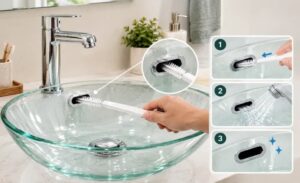
`Most sink overflow cleaning is basic maintenance. A well-designed sink, such as those offered by Renovators Supply Manufacturing, can make routine maintenance easier, but occasional cleaning is still important to prevent buildup.
If the passage stays blocked after repeated cleaning, water keeps backing up, the sink drains very slowly, or you notice leakage underneath the sink, the issue may extend beyond the overflow opening.
Persistent foul smells and unusual gurgling are worth paying attention to as well.
Professional help is also sensible if you suspect something inside the drainage system is damaged or disconnected.
That doesn’t make every bad smell a plumbing emergency.
It just means there is a point where more aggressive DIY cleaning isn’t really helping anymore.
Frequently Asked Questions About Cleaning Sink Overflow Openings
How do you clean the inside of a sink overflow hole?
Use a small flexible brush or narrow bottle brush to gently scrub the reachable part of the passage. Rotate the brush rather than forcing it straight in, then flush the overflow several times with warm water to remove the loosened residue.
Why does my sink overflow hole smell?
Soap residue, organic material, grime, and stagnant moisture can collect inside the overflow passage and start producing an odor. Cleaning and flushing the passage often helps, but a smell that persists may actually be coming from the main drain or trap.
Can I pour baking soda and vinegar into a sink overflow?
You can use small amounts as an optional cleaning method for light buildup and odor. Follow the reaction with warm water. It is better viewed as a cleaning aid than as a reliable way to remove a serious clog.
How do you unclog a bathroom sink overflow?
Begin with a flexible brush and warm-water flushing. Repeat the process if necessary. Avoid pushing sharp objects into the passage. If water still cannot move through it or the clog keeps returning, the blockage may need professional attention.
Can a sink overflow get blocked?
Yes. Soap residue, dirt, hair, mineral deposits, and other debris can gradually accumulate inside the overflow passage. Because the area is often forgotten during routine cleaning, buildup may remain there much longer than people realize.
How often should I clean my sink overflow?
A light cleaning every few weeks and a deeper cleaning every few months is a reasonable starting point. Clean it sooner if you notice visible grime, odor, mineral buildup, or reduced water movement through the opening.
Why is water coming out of the sink overflow?
The overflow is meant to receive water when the basin level rises. If water behaves unusually around the opening, there may be excessive water flow, buildup, or a drainage issue. Check both the overflow passage and the main sink drain rather than assuming only one is responsible.
Do all bathroom sinks have an overflow opening?
No. Sink designs vary. Many traditional bathroom sinks include an overflow passage, but some modern, vessel, or specialized designs may not have one. If you are unsure, check the sink design rather than assuming every small opening serves the same purpose.


