
Why Routine Maintenance Matters for Efficiency, Safety, and Longevity
The hum of your HVAC system is more than just background noise; it represents a significant portion of your home’s annual expenses. Did you know that nearly half of the average household’s $1,900 yearly energy bill is dedicated to heating and cooling? This substantial investment highlights just how critical your HVAC system is to both your comfort and your budget.
Imagine the peace of mind that comes from knowing your system is running at peak performance, preventing unexpected breakdowns, and consistently delivering clean, fresh indoor air. Regular maintenance, often performed by a certified technician (like the one you see servicing a central air conditioning unit), is the cornerstone of achieving this reliability.
Neglecting your HVAC system can lead to compounding costs over time, as this infographic illustrates, from skyrocketing utility bills to premature equipment failure. We will explore how consistent heating and cooling maintenance not only saves you money on cooling expenses and heating costs but also dramatically boosts equipment efficiency, prevents costly breakdowns, and significantly improves indoor air quality.
In this extensive guide, we will delve into why routine care is essential for efficiency, safety, and longevity. We’ll cover what professional services entail, what DIY tasks homeowners can perform, and answer your most pressing questions about keeping your HVAC system in top shape for years to come.
The decision to invest in regular HVAC maintenance is not merely about preventing inconvenient breakdowns; it’s a strategic move that delivers substantial returns in energy efficiency, safety, and equipment longevity. In August 2026, with energy costs remaining a significant concern for homeowners, optimizing your heating and cooling systems is more important than ever.
Consider the financial implications: homeowners who adhere to a twice-yearly maintenance schedule often report 15 to 20 percent lower energy bills. This isn’t surprising when you realize that a dirty condenser coil alone can reduce efficiency by a staggering 30 percent. A neglected system, in general, consumes approximately 20% more energy than a well-maintained one. This translates directly into higher utility bills month after month.
The financial return on investment (ROI) for preventive HVAC maintenance is truly impressive, with studies documenting a 545% return for every dollar invested. This substantial ROI comes from a combination of reduced energy consumption, fewer costly emergency repairs, and the extended lifespan of your equipment. For instance, a simple act like replacing a dirty air filter can cut air conditioner energy consumption by 5–15%.
Beyond the immediate savings, regular maintenance helps in the long run. It extends the operational life of your HVAC equipment from an average of 10-12 years for neglected systems to 18-25 years. This means delaying a major capital expense for nearly a decade or more. Moreover, preventive maintenance can avoid up to 95% of breakdowns, drastically reducing the stress and expense of unexpected repairs. Maintained systems average $185 in unplanned repairs per year, compared to $640 for neglected systems.
Indoor air quality also sees a marked improvement with consistent maintenance. HVAC systems, when properly cared for, filter out dust, allergens, and other airborne pollutants, creating a healthier living environment. Conversely, a system with dirty coils and clogged filters can circulate these contaminants, exacerbating allergies and respiratory issues.

A clear visual of the stark difference between a neglected and a well-maintained outdoor condenser coil, highlighting the impact on efficiency.
Investing in regular HVAC care is a proactive step towards a more comfortable, safer, and financially sound home. For comprehensive guidance on maintaining your system, exploring professional HVAC service options can provide invaluable insights and support.
Critical Heating Safety and Carbon Monoxide Prevention
When it comes to heating systems, safety is paramount, particularly concerning the risk of carbon monoxide (CO) poisoning. A heating system tune-up isn’t just about efficiency; it’s a life-saving measure. Cracked heat exchangers are a silent killer, causing approximately 430 carbon monoxide deaths and 50,000 emergency room visits in the United States every year.
During a professional fall heating tune-up, technicians perform critical safety checks that directly address this danger. They meticulously inspect the heat exchanger for any signs of cracks or corrosion. Even microscopic fissures can allow deadly carbon monoxide to leak into your home’s air supply.
These safety checks are non-negotiable. While homeowners can perform some DIY tasks, inspecting a heat exchanger or performing combustion analysis requires specialized training and equipment. Prioritizing a professional heating tune-up each fall is the most effective way to safeguard your family from the invisible threat of carbon monoxide.
Equipment Lifespan Extension and Failure Point Avoidance
Beyond safety, regular HVAC maintenance is a powerful tool for extending the operational lifespan of your equipment and proactively avoiding common, costly failure points. A neglected system can die 8 to 10 years earlier than a maintained one, leading to premature replacement expenses that can run into thousands of dollars.
Preventive maintenance delivers a documented 73% reduction in unplanned downtime. Homeowners who maintain their systems experience roughly 40% fewer emergency repair calls. This proactive approach ensures your system lasts 18-25 years, compared to the 10-12 years of neglected systems.
This table underscores that while an inspection might cost $150-$300, it can prevent issues that cost thousands. A clogged filter, for instance, is the root cause of nearly 60 percent of premature HVAC failures. By addressing these smaller issues proactively, we protect the major components and ensure the system’s longevity.
Essential Seasonal Protocols for HVAC System Maintenance
Effective HVAC maintenance isn’t a one-size-fits-all approach; it’s a carefully orchestrated seasonal ritual guided by industry standards. The ANSI/ACCA 4 QM standard, for instance, sets the benchmark for quality inspection and care in residential HVAC systems, outlining minimum inspection requirements. Adhering to these protocols, especially through pre-season scheduling, is crucial for several reasons:
Firstly, it ensures OEM (Original Equipment Manufacturer) warranty compliance. Major manufacturers like Carrier, Trane, Lennox, Rheem, and Goodman often require documented annual service to honor their 10-year parts warranties. Skipping these professional visits can void your warranty, leaving you responsible for the full cost of expensive component replacements.
Secondly, professional maintenance guarantees that technician certification is in place. Tasks involving refrigerant handling, gas line work, or high-voltage electrical diagnostics legally and safely require EPA Section 608 certification or other specialized licenses. These professionals bring expertise and specialized tools for accurate diagnostic procedures that DIY efforts simply cannot replicate.
Finally, scheduling pre-season check-ups before peak summer and winter seasons is a best practice. HVAC contractors experience peak busyness once summer and winter arrive. Scheduling in spring for cooling and fall for heating ensures you get timely service when technicians are less overwhelmed, often at a lower price point.
Spring Cooling Inspection and Tune-Up Procedures
As the warmer months approach, typically from March to May, a professional spring cooling tune-up is essential to prepare your air conditioning system for the heavy demands of summer. This comprehensive service ensures optimal performance, energy efficiency, and prevents mid-season breakdowns.
A thorough spring tune-up typically takes between 60 and 90 minutes and covers approximately 30 individual procedures, ensuring your system is ready to deliver efficient, reliable cooling.
Fall Heating Inspection and Tune-Up Procedures
As summer fades and the chill of autumn sets in (typically September to November), a professional fall heating tune-up becomes indispensable. This service focuses on safety, efficiency, and preparing your system for the demands of winter. The specific tasks vary slightly depending on whether you have a gas furnace, oil furnace, or heat pump.
By addressing these specific components and functions, a fall tune-up ensures your heating system operates safely, efficiently, and reliably throughout the coldest months, often preventing issues before they become emergency repairs.
DIY Care vs. Professional Protection Plans
Navigating HVAC maintenance involves a balance between what homeowners can safely do themselves and when professional expertise is indispensable. While DIY tasks are crucial, professional intervention, often through maintenance agreements or protection plans, offers a layer of security and expertise that homeowners cannot replicate.
Maintenance agreements, also known as service contracts or protection plans, are increasingly popular for good reason. They typically include:
These plans essentially bundle the benefits of regular professional care with financial incentives and convenience. While a basic maintenance plan might cover just the tune-ups, a full protection plan could include more extensive parts and labor coverage, offering comprehensive peace of mind.
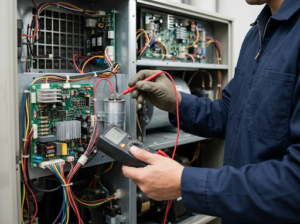
A technician uses a multimeter to test a capacitor, a task requiring specialized tools and expertise.
While homeowners can handle basic tasks, complex diagnostics, refrigerant handling, electrical work, or gas line adjustments require certified professionals. Trying to perform these tasks yourself can be dangerous, void warranties, and lead to more expensive repairs down the line.
Routine DIY HVAC System Maintenance for Homeowners
Between professional visits, there’s a significant amount homeowners can do to support their HVAC system’s health, boost efficiency, and improve indoor air quality. These DIY tasks are generally safe, require minimal tools, and can make a big difference.
These routine tasks empower homeowners to actively contribute to their HVAC system’s efficiency and longevity, complementing the essential work done by professionals.
Commercial vs. Residential HVAC System Maintenance Demands
While the fundamental principles of HVAC maintenance—efficiency, safety, and longevity—apply to both residential and commercial systems, the scale, complexity, and regulatory requirements differ significantly.
Commercial HVAC maintenance is a more rigorous, systematic, and often predictive endeavor, driven by operational continuity, regulatory compliance, and a larger financial impact, whereas residential maintenance focuses more on homeowner comfort and individual unit efficiency.
Frequently Asked Questions About HVAC Maintenance
We understand that homeowners have many questions about keeping their HVAC systems in top condition. Here, we address some of the most common inquiries regarding system scheduling, operating costs, and performance symptoms.
How often should a central HVAC system be professionally serviced?
For optimal performance, energy efficiency, and extended lifespan, a central HVAC system should be professionally serviced twice per year.
This biannual approach ensures that each component is inspected and tuned for its respective peak operating season. For heat pumps, which provide both heating and cooling, these two visits are even more critical as the system works year-round. This schedule aligns with industry best practices and often satisfies manufacturer warranty requirements.
What are the earliest warning signs that an HVAC system requires urgent service?
Catching problems early can prevent minor issues from escalating into expensive breakdowns. Be vigilant for these warning signs:
If you notice any of these symptoms, it’s advisable to contact a professional HVAC technician promptly to diagnose and resolve the issue before it leads to a complete system failure.
Does skipping annual maintenance void manufacturer equipment warranties?
Yes, in most cases, skipping annual professional maintenance can void your manufacturer equipment warranties. This is a critical point that many homeowners overlook until it’s too late.
Major HVAC manufacturers, including Carrier, Trane, Lennox, Rheem, and Goodman, explicitly state in their warranty terms that documented annual professional service is a prerequisite for honoring their 10-year (or longer) parts warranties. These companies understand that their equipment is designed to last, but only with proper care. Neglect leads to premature wear and tear, which they are not obligated to cover under warranty.
Without this documentation, if a major component fails—such as a compressor or heat exchanger—the manufacturer may deny your warranty claim, leaving you to bear the full cost of replacement, which can be thousands of dollars. Therefore, the small investment in annual maintenance is also an investment in protecting your long-term financial security related to your HVAC system.
Conclusion
The importance of regular HVAC system maintenance cannot be overstated. It is a foundational practice that underpins your home’s comfort, safety, and financial well-being. From ensuring optimal energy efficiency and generating cumulative energy savings that significantly reduce your utility bills, to enhancing indoor air quality for a healthier living environment, the benefits are far-reaching.
By adhering to a consistent maintenance schedule, both through professional tune-ups and diligent DIY tasks, we actively prevent costly breakdowns and extend the lifespan of our valuable HVAC equipment by many years. The safety verification, particularly concerning heating systems and the prevention of carbon monoxide hazards, provides invaluable peace of mind for our families.
In August 2026, as we continue to prioritize smart home management, investing in your HVAC system’s health represents a commitment to long-term value. It’s not just about fixing problems when they arise; it’s about proactively ensuring system reliability, maximizing performance, and securing a comfortable, safe, and efficient home for the future.